

Welcome To Your
Private Diamond & Jewellery Space
Sign in to continue your HIVA experience.
“A world of diamonds, crafted around you.”
Understand the Craft. Choose with Confidence.
Explore the materials, craftsmanship, settings, sizing, quality factors and care behind fine jewellery — from the first design sketch to the finished heirloom piece.
At its core, jewellery transcends mere ornamentation. Across human history, it has served as symbolic currency, spiritual talisman, marital covenant, and heirloom investment. True fine jewellery is defined not by passing trends, but by noble metallurgy, precision diamond setting, and enduring structural integrity.
Jewellery frames facial contours, accentuates neckline proportions, and expresses personal taste. Fine pieces interact with natural ambient light to produce scintillation that synthetic materials cannot replicate.
From matrimonial solitaires and eternity bands to celebratory milestone tennis bracelets, jewellery anchors emotional memories into indestructible physical matter designed to outlive its wearer.
Unlike consumer tech or fashion garments that depreciate to zero, solid gold, platinum, and certified diamonds preserve intrinsic material worth and can be melted, recast, or reset across generations.
Understanding the clear line between solid noble metals and surface-plated alloys is the single most important lesson in jewellery acquisition.
Solid 18K/14K Gold (Yellow, White, Rose) & 950 Platinum with certified diamonds
Precision CAD modeling, vacuum casting, microscope stone setting
Lifelong everyday heirloom durability; fully resizable & repairable
Hypoallergenic, will not tarnish, turn green, or peel
Warm water mild detergent, professional annual polish
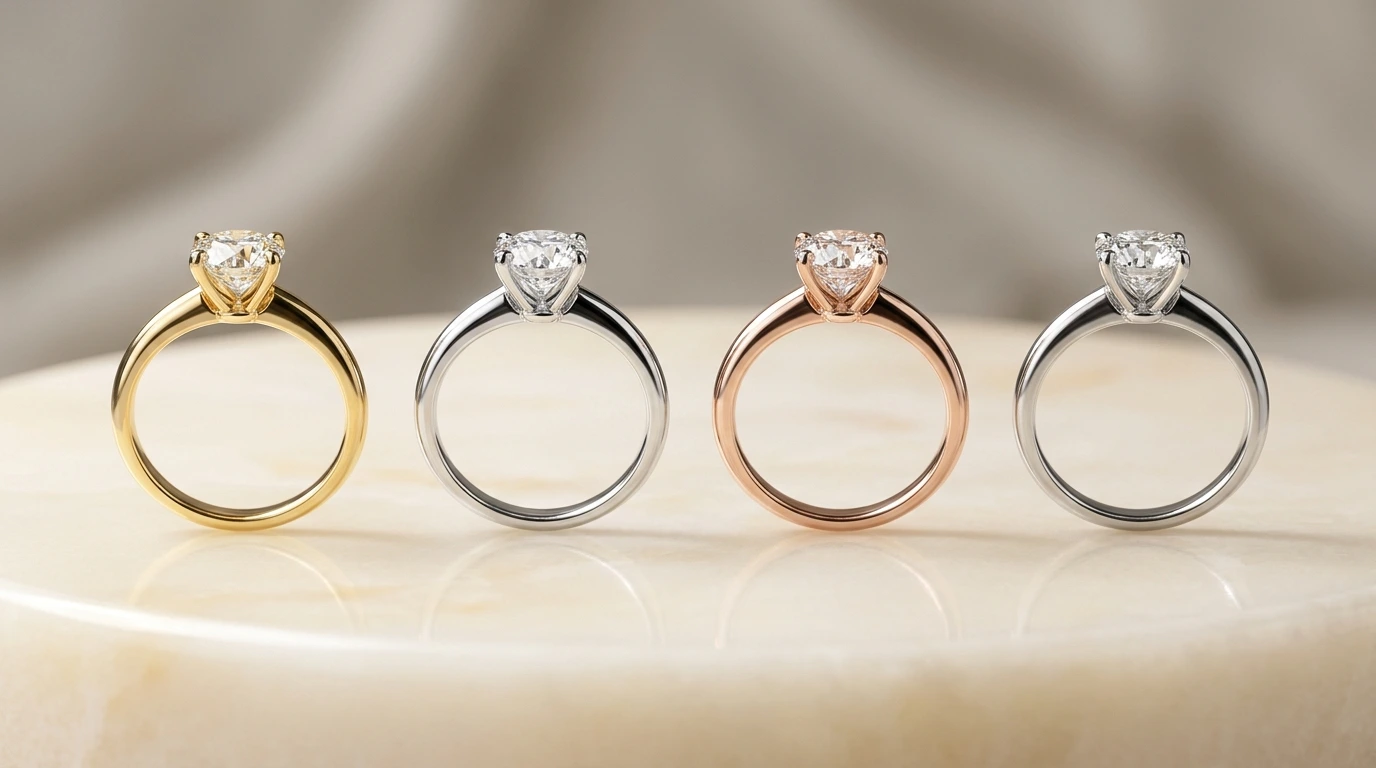
Engagement rings, wedding bands, daily luxury, lifelong gifts
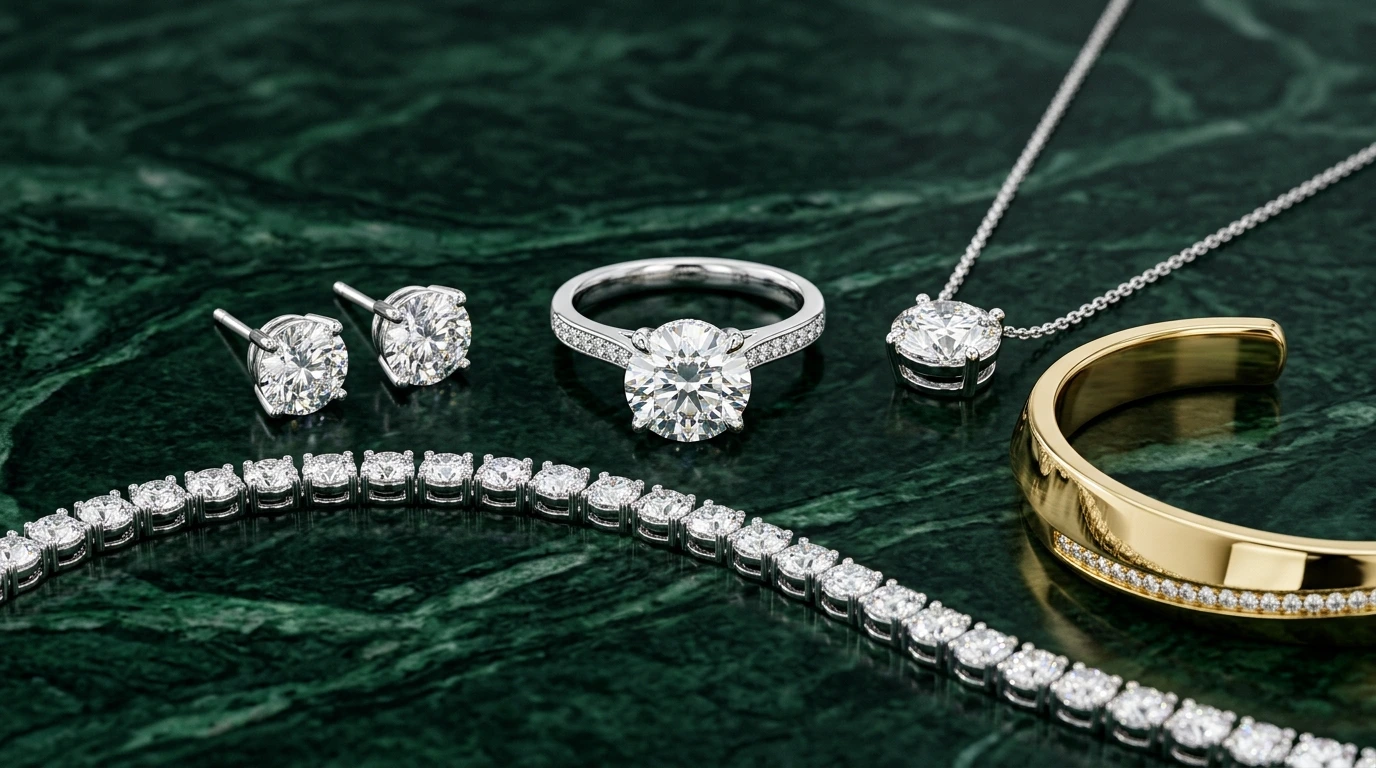
Every category of fine jewellery presents distinct mechanical, structural, and ergonomic considerations. Explore the 10 core categories below to understand common styles, structural engineering, and essential buying criteria without leaving the page.
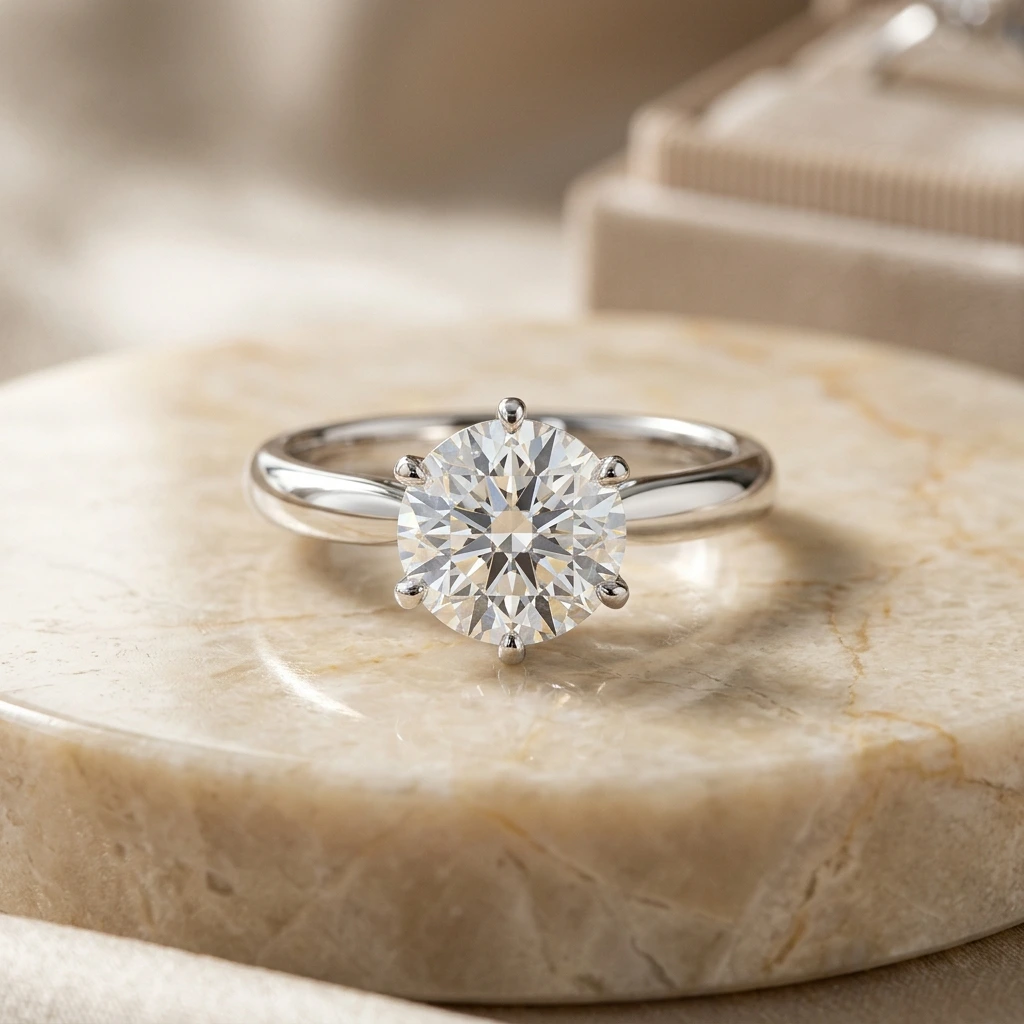
The pinnacle of fine jewellery craftsmanship. Designed to withstand constant hand movement, pressure, and tactile interaction.
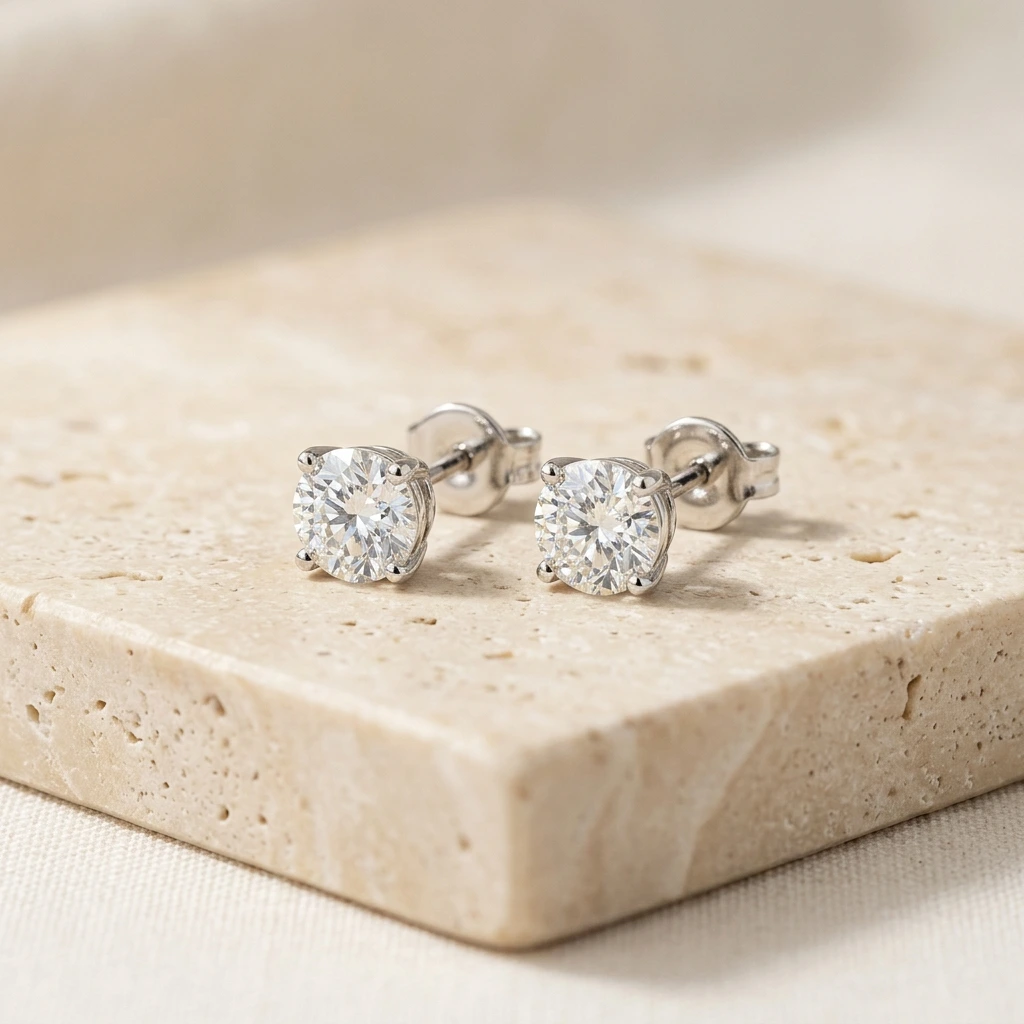
Positioned directly against facial contours. Light reflection, color matching between stone pairs, and secure backings are paramount.
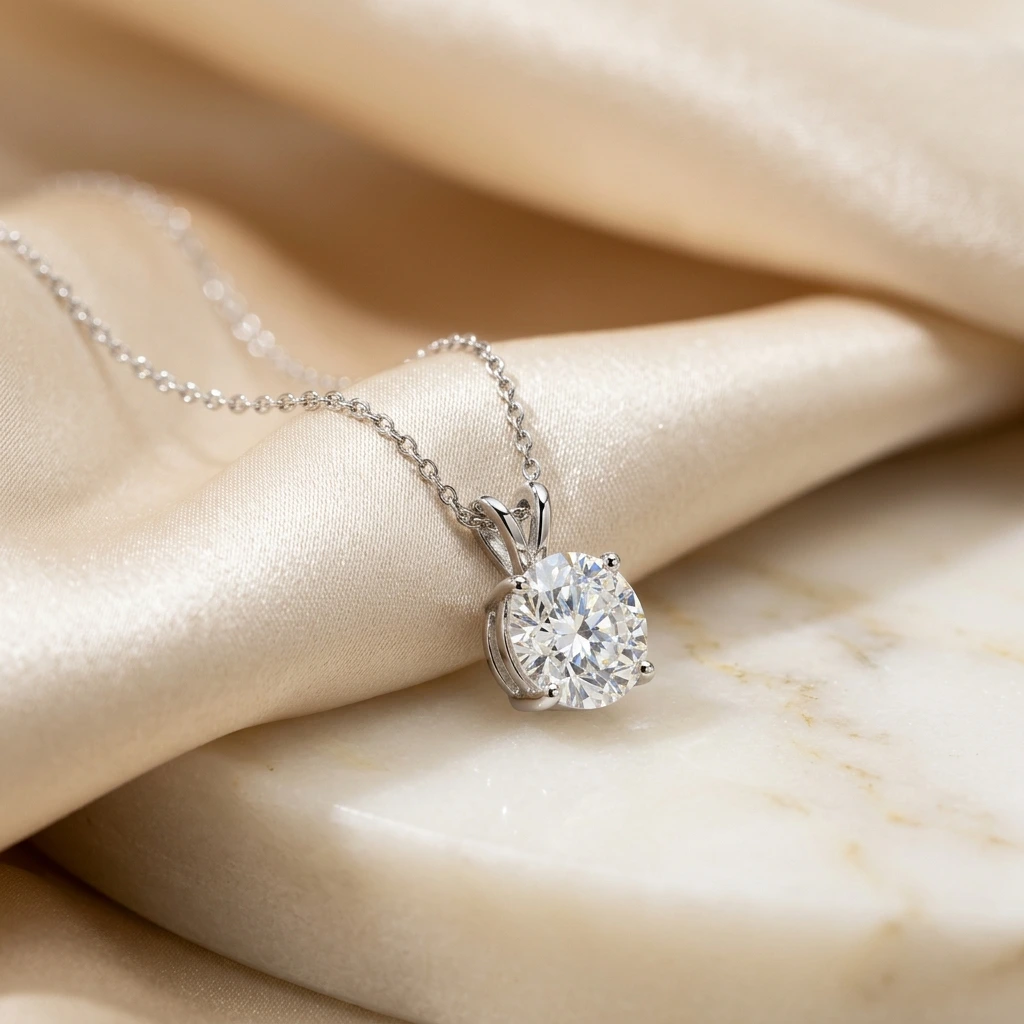
Fluid engineering designed to drape gracefully along the collarbone without flipping or catching hair.
A standalone focal ornament suspended on a precious metal chain via an articulated bail.
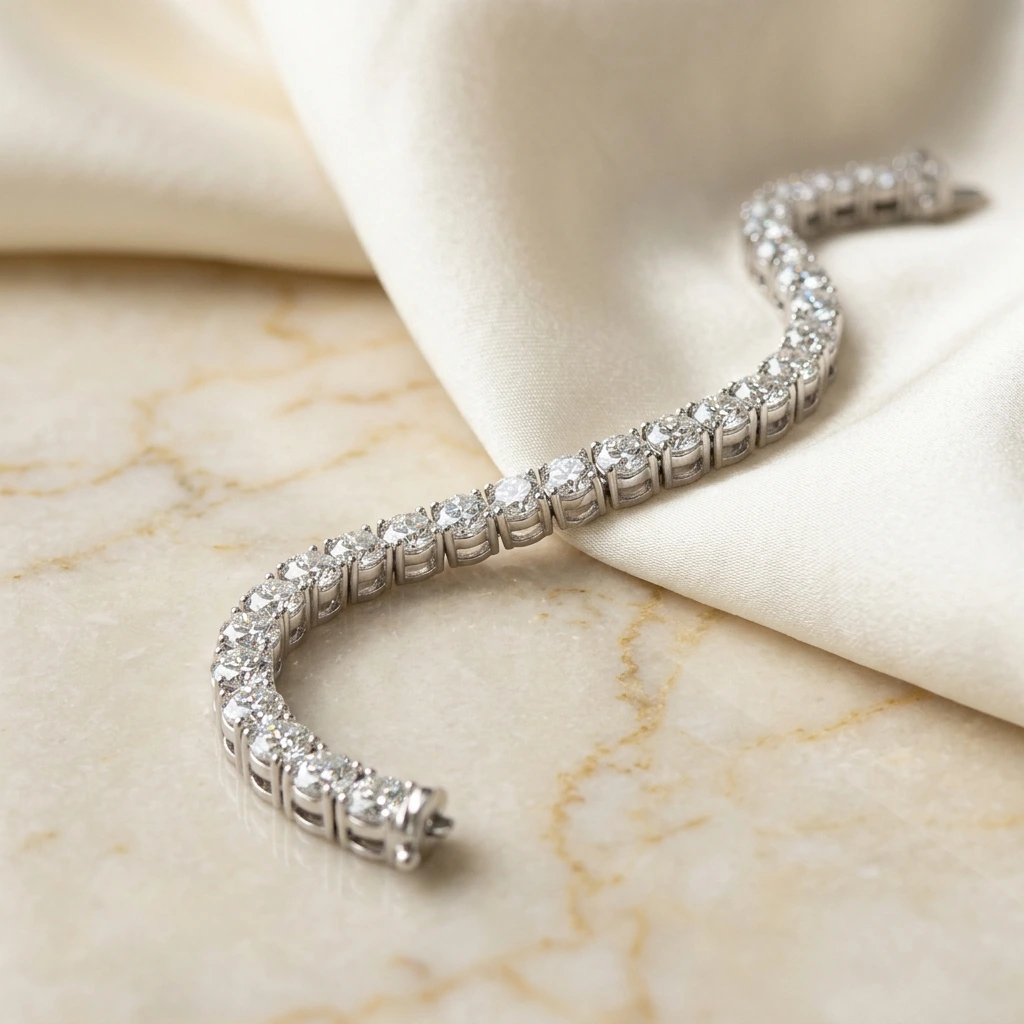
A continuous line of perfectly calibrated diamonds. Requires highest-tolerance hinge flexibility and fail-safe closure security.
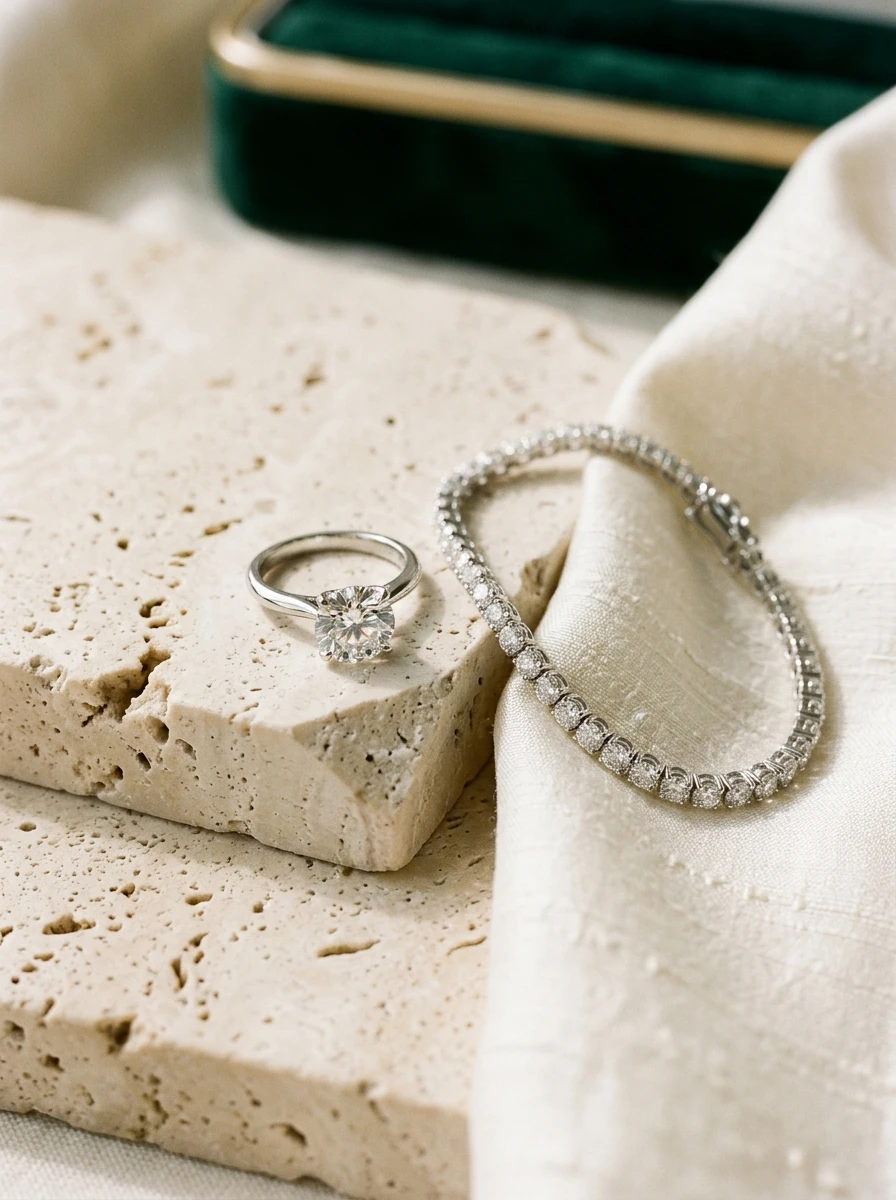
Rigid circular or oval wristwear. High gold weight ensures structural shape retention without denting or bending over decades.
Sacred matrimonial jewellery designed to sit flush as a matched pair and endure daily lifetime wear without abrasive friction.
Understated masculine luxury marked by clean geometry, brushed matte finishes, substantial gold weight, and flush-set diamonds.
Wearable sculptural art pinned to outerwear, shawls, and lapels. Highlights multi-gemstone pavé and intricate pierced metalwork.
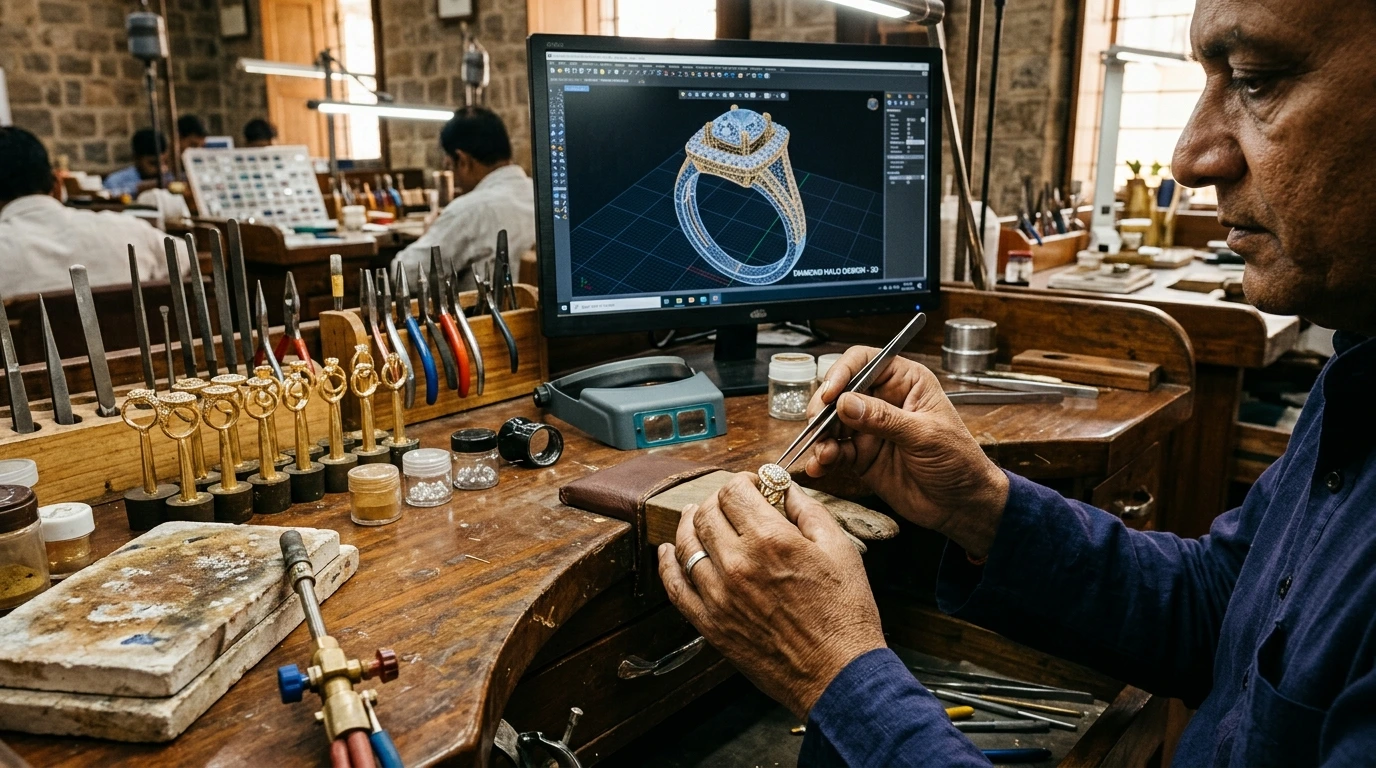
Jewellery engineered from an original customer concept through 3D CAD modeling, photopolymer wax, and master hand-setting.
Behind the effortless beauty of a finished ring lies complex micromechanical architecture. Click the interactive hotspots on the technical photograph below to explore the structural anatomy, engineering roles, and bench craftsmanship criteria.
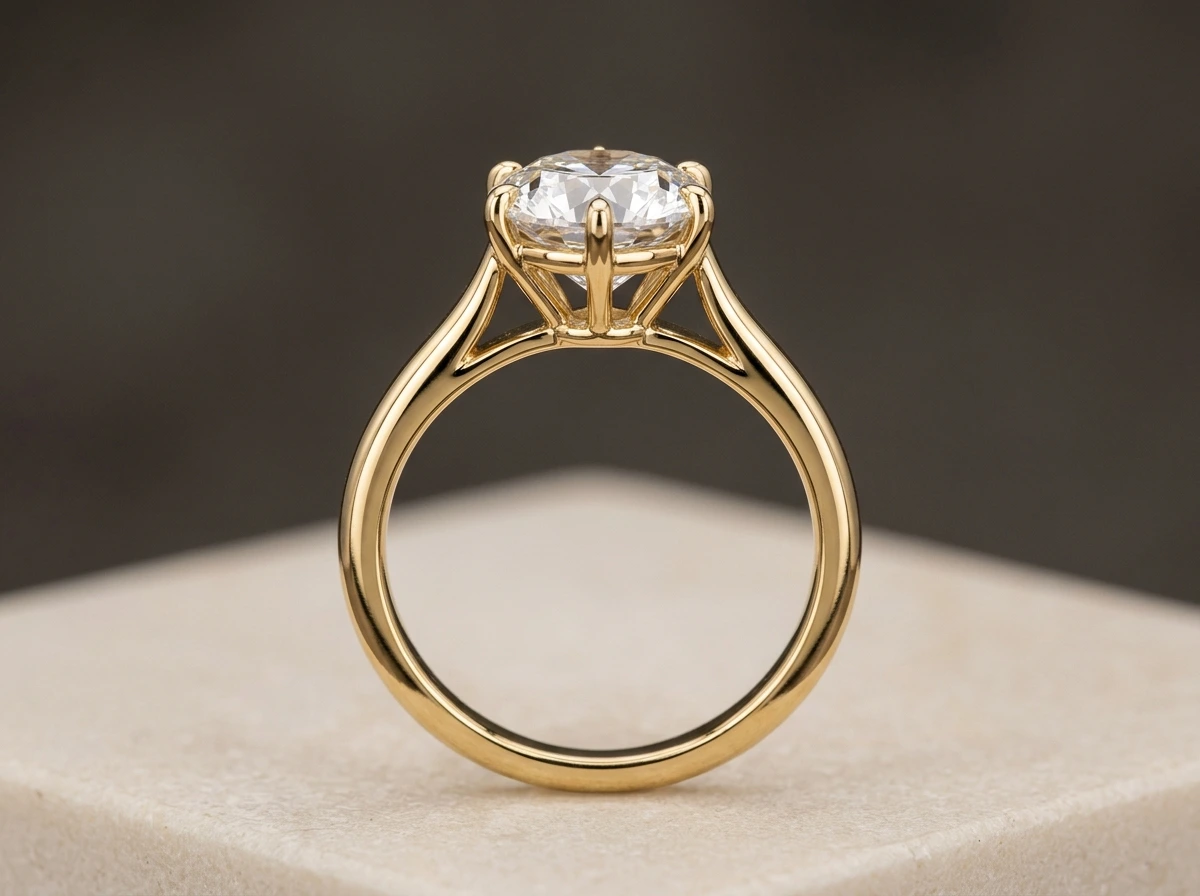
The focal diamond or gemstone that commands visual dominance in the piece.
The seat must be hand-cut with exact seat burrs matching the diamond pavilion depth and girdle angle for maximum optical light return.
Ensure the stone is perfectly level. Even a 2-degree tilt creates visual asymmetry and leaves one girdle edge vulnerable to chipping.
Every fine jewellery masterpiece begins at the metallurgical crucible. Discover how alloying ratios, karat purity, crystal densities, and surface treatments shape your jewellery’s colour, longevity, and heirloom value.
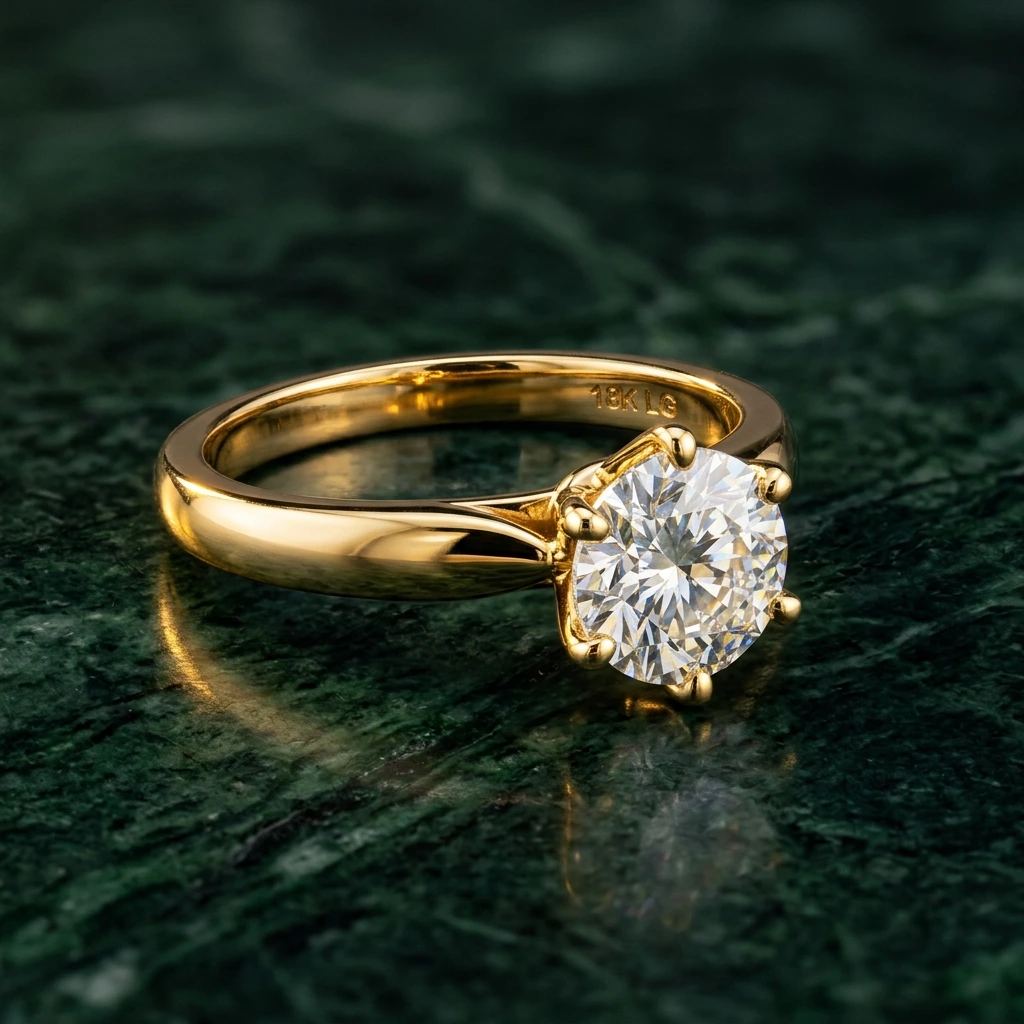
The timeless signature of noble adornment. Natural gold alloyed with copper and silver maintains an authentic warm sunlit luster that never fades, discolors, or requires surface replating.
The word “Karat” (kt/K) measures pure gold content out of 24 parts. Higher karats provide richer natural golden warmth, while balanced alloys give prong structural rigidity.
Both metals provide a modern white lustre, yet operate with fundamentally divergent physical behaviors, weights, and aging mechanisms.
| Key Dimension | 950 Platinum (Pt950) | 18K White Gold (750) |
|---|---|---|
| Natural Color & Finish | Naturally pure silvery-white through and through. Never changes color or yellows. | Natural pale warm-white alloy, plated with pure Rhodium for mirror chrome brightness. |
| Density & Heft | 21.4 g/cm³ (~40% heavier than 18K gold in identical ring volume). Luxurious hand presence. | 15.8 g/cm³. Lightweight, exceptionally comfortable for wide bands and daily wear. |
| How It Scratches (Wear Physics) | Metal Displacement: Scratches displace metal molecules without removing mass. Develops a prized antique satin patina over years. | Metal Removal: Micro-abrasions slowly flake off minuscule metal particles over decades when repeatedly polished. |
| Prong Grip & Stone Security | Malleable but unbreakable molecular density. Prongs bend rather than snap under accidental trauma, holding diamonds securely. | Rigid and spring-like. Holds high prong tension, but will snap if bent past fatigue threshold. |
| Hypoallergenic Suitability | 100% Hypoallergenic (95% pure platinum). Perfect for extremely reactive, sensitive skin. | Hypoallergenic when crafted nickel-free (standard at HIVA Atelier). |
| Lifetime Maintenance Cycle | Zero replating required. Clean with ultrasonic or wipe with soft microfibre. | Requires periodic Rhodium re-dipping every 18 to 36 months to refresh mirror brilliance. |
From the raw crystalline lattice deep within the mantle or synthesis chamber to mathematically orchestrated facets that bend light, explore the science and art behind jewellery’s most celebrated gems.
High-resolution lasers map internal inclusions and structural grain to optimize carat retention and flawless light return.
Ultra-precise green laser beams divide the rough crystal along crystallographic planes with micron accuracy.
Two diamonds rotate against each other at extreme RPMs to carve the perfectly symmetrical outer girdle perimeter.
The master polisher cuts the first 17 or 18 fundamental facets (table, culet, 8 upper & lower main pavilion facets).
The final 40 star, bezel, and upper/lower girdle facets are polished to mirror precision on diamond powder scaifes.
Click on any diamond shape to reveal facet counts, optical physics, table/depth ratios, and optimal jewellery settings.
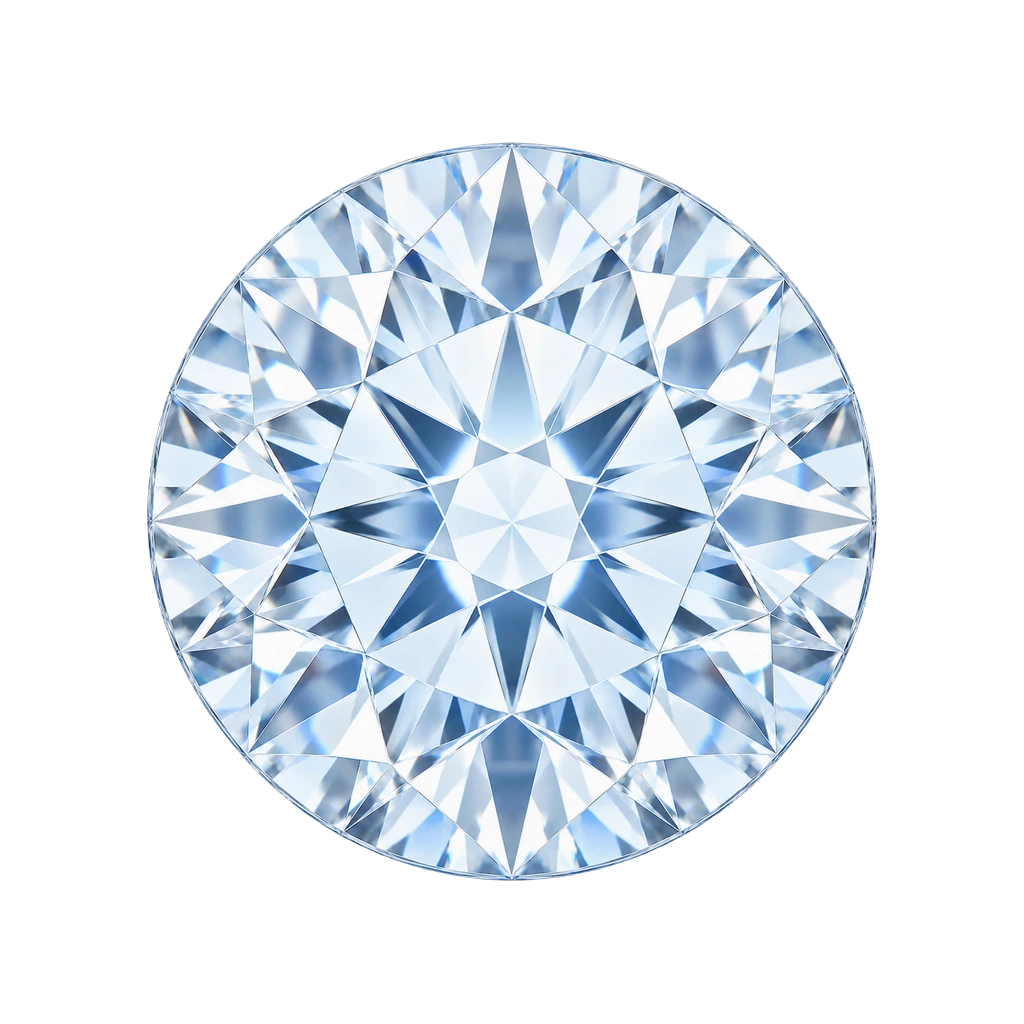
The undisputed king of light dispersion. Engineered mathematically by Marcel Tolkowsky in 1919 to achieve 100% internal total light reflection, scintillation, and rainbow spectral fire.
Both are 100% real diamonds sharing the exact identical crystal lattice, optical fire, and physical properties. Here is the objective truth.
| Characteristic | Lab-Grown Diamond (CVD / HPHT) | Natural Mined Diamond |
|---|---|---|
| Chemical Composition | Pure Carbon (C) • sp³ Diamond Cubic Lattice | Pure Carbon (C) • sp³ Diamond Cubic Lattice |
| Mohs Hardness & Scratch Resistance | 10.0 Mohs (Hardest substance on Earth) | 10.0 Mohs (Hardest substance on Earth) |
| Refractive Index & Dispersion Fire | 2.417 Refractive Index | 0.044 Dispersion | 2.417 Refractive Index | 0.044 Dispersion |
| Certification & Laser Inscription | Certified by IGI & GIA with unique microscopic girdle inscription | Certified by IGI & GIA with unique microscopic girdle inscription |
| Origin & Environmental Impact | Grown in controlled renewable-energy plasma reactors. Zero earth displacement or conflict mining. | Extracted from deep underground open-pit mines. Requires hundreds of tons of earth moved per carat. |
| Price Advantage | 60% to 85% more accessible, enabling significantly larger carats and flawless clarity grades. | Command high speculative scarcity premiums due to deep supply-chain cartel markups. |
While diamonds reign in hardness, colored gemstones demand bespoke metallurgical care and distinct setting techniques.
Color: Velvety Cornflower to Deep Royal Blue
Color: Vibrant Pigeon Blood Crimson Red
Color: Lush Vivid Deep Grass Green
Color: Lustrous White, Champagne, Golden, or Tahitian Peacock
The setting is both the protective vault and the stage for your precious gemstones. Discover how different mountings balance light dispersion, daily wear security, snag resistance, and metal harmony.
The gold standard for diamond solitaires. Three, four, or six metal tines grasp the diamond girdle, elevating it above the shank to invite light through every facet angle.
The finest jewellers obsess over the tips of prongs. How they are shaped dictates the diamond’s silhouette, visual softness, and safety.
Classic smooth hemispherical tips. Gentle on clothing, highly durable, standard in modern solitaires.
Tapered to a crisp, needle-like point. Hugs the diamond facet corners with exquisite Haute Joaillerie finesse.
Two slender prongs side-by-side at each corner. Provides redundant security and regal vintage charm.
V-shaped metal caps engineered specifically to armor vulnerable points on Princess, Pear, Marquise, and Heart cuts.
A single prong holds the adjacent edges of two neighbouring diamonds in eternity bands and tennis bracelets.
When mounting an exceptional D, E, or F Color diamond into an 18K Yellow Gold or Rose Gold band, setting the diamond inside Yellow Gold prongs can cause warm golden reflection into the diamond table. HIVA master jewellers frequently recommend a two-tone construction: an 18K Yellow Gold shank paired with 950 Platinum or 18K White Gold prongs to ensure your diamond reflects pure, icy crystalline white brilliance while keeping your preferred golden band!
Jewellery is wearable micro-mechanics. Explore how chains flex without kinking, how tennis bracelets articulate seamlessly, how safety clasps prevent loss, and how earring backs safeguard your most precious stones.
Interlocking identical oval or round links. The most dependable everyday chain; lays flat and never kinks.
Interconnected square cubic links forming a smooth geometric line with clean light reflections.
Four strands of interlocking oval links braided in a wheat grain pattern. Exceptional tensile strength.
Multiple links woven tightly together in a spiral spiral twist mimicking a natural golden cord.
Tightly joined wavy plates creating a smooth, sleek, continuous tubular metal surface.
Distinctive rhythm: 2–3 small circular links followed by 1 elongated oval link. Classic Italian heritage.
In our Surat atelier, ancient lost-wax casting converges with aerospace-grade 3D CAD modeling and microscope stone setting. Witness the meticulous journey from concept sketch to heirloom reality.
Over 100 dedicated bench hours and 15 distinct artisanal disciplines converge on every single HIVA fine jewellery piece.
Every jewel begins with an intimate artistic sketch rendered in watercolour gouache to map light refraction, negative space, and ergonomic wrist/finger drape.
Master illustrators calculate stone proportions, clearance heights for low-profile wedding ring flush fits, and balance structural gold weight against delicate silhouettes.
Understanding how manufacturing technique directly dictates durability, prong alignment, and structural longevity.
Ingots are pulled into wire, rolled into sheets, hand-sawn and pierced. Romantic and unique, but dependent entirely on individual artisan mood; minor symmetry variations inevitable.
Micron-perfect 3D CAD modeling creates mathematically balanced geometry and optimal diamond seats, followed by vacuum casting and master microscope hand-setting, filing, and polishing.
Thin sheet metal stamped rapidly under hydraulic press tooling. Produces hollow, lightweight rings with brittle prongs that cannot be modified or safely resized without collapsing.
A jewel must fit like second skin. Explore international ring size conversions, necklace silhouette drapes, ergonomic bracelet slack formulas, and earring weight thresholds.
From tight collar chokers to dramatic lariats, discover where each chain length falls and how to pair them with collarlines.
Tightly encircles the throat. Best with open-shoulder, V-neck, and boatneck evening gowns.
Rests gently at the base of the throat. Ideal for scoop necks, button-down shirts, and daily pendants.
Falls gracefully across the collarbone. The global standard for diamond solitaire pendants and layering anchors.
Rests a few inches below the clavicle. Flattering with plunge necklines, high turtlenecks, and professional tailoring.
Drapes to the center of the breastbone. Dramatic for formal galas or single-chain statement layering.
Falls to the navel or can be wrapped twice into a layered choker. Exceptional versatility.
Wrap a flexible measuring tape flush around the narrowest part of your wrist, then apply the master fit index:
Total combined weight (metal + diamonds) determines all-day comfort without earlobe stretching:
Fine jewellery is an enduring emotional and monetary investment. Understand the 10 critical craftsmanship indicators master jewellers look for, and see exactly how fair atelier pricing is calculated.
Under a 10x gemological loupe, cast metal surfaces must be silky-smooth with zero micro-bubbles, voids, or sponge-like pinholes caused by improper vacuum casting.
High: Porosity weakens structural integrity and dulls the mirror finish.Every prong must grasp the diamond girdle at an identical angle, table height, and curvature, firmly burnished over the bezel without pinching or crushing.
Critical: Prevents stone loosening, wobbling, or lost diamonds.The diamond table facet must sit 100% parallel to the plane of the finger band. A tilted diamond leaks light through the side pavilions and appears dark.
High: Guarantees 100% internal total light reflection and optical fire.Where cathedral shoulders, heads, or sizing sections join the shank, the metallurgical seam must be completely invisible with zero discoloration.
High: Uneven solder creates weak points vulnerable to stress fractures.The sharp pointed culet at the diamond's bottom must hover safely inside the basket without contacting the interior finger rail metal.
Critical: Touching metal causes culet chipping under daily finger impacts.The inner circumference of the ring shank must feature a gently curved, polished radius rather than flat sharp edges, allowing effortless sliding over knuckles.
Essential: Provides silky 24/7 all-day wear comfort without skin pinching.Fine jewellery is judged by the areas the public cannot see. The intricate under-gallery beneath the diamonds must be as high-polished as the exterior shank.
Haute Joaillerie: Distinguishes true luxury ateliers from commercial mass production.Tennis bracelet and necklace clasps must snap closed with a crisp, audible click and require deliberate finger force to release, backed by side wire safety catches.
Critical: Guarantees your high-carat tennis bracelet never slips off unnoticed.Every piece must bear crisp, laser-engraved legal hallmarks certifying karat purity (750 for 18K, 950 for Pt), the assay office mark, and maker's seal.
Legal Guarantee: Certifies precious metal purity backed by government assay testing.The diamond's unique IGI or GIA certificate number is laser-inscribed directly onto its girdle edge, matching your digital dossier and physical laboratory card.
Identity Proof: 100% verification that the mounted diamond matches its laboratory grading.Where does your money actually go? We dismantle traditional retail secret markups with an honest, mathematical breakdown of true manufacturing costs.
By manufacturing in-house in our Surat diamond atelier, we eliminate wholesale distributors, multi-tier broker commissions, and expensive retail rent.
Legacy brick-and-mortar luxury houses mark up identical raw materials by 300% to 1000% to finance lavish prime real estate, celebrity campaigns, and multi-tier agent commissions.
By law, all fine jewellery must carry laser-etched stamps certifying purity. Here is how to inspect and decode the marks inside your ring shank.
750 denotes 18K gold (75.0% pure). 585 denotes 14K gold (58.5% pure).
Certifies 950 parts per thousand pure platinum (95.0% pure noble platinum).
Bureau of Indian Standards official equilateral triangular emblem proving assay verification.
Our registered atelier sponsor stamp, legally tying the piece to our lifetime warranty.
True style is the effortless marriage of metallurgy, gemstone physics, human anatomy, and personal expression. Discover the definitive rules of skin harmony, face proportions, and multi-metal layering.
Select your undertone below to uncover your ideal metallurgical palette and gemstone pairings.
Warm undertones glow radiantly against rich 18K Yellow Gold. The sunlit warmth of pure gold creates an organic, harmonious warmth against your natural complexion.
Elevate your daily jewelry rotation from casual accessorizing to an intentional, high-fashion statement.
Never let heavy jewellery pieces compete. If wearing a dramatic high-carat tennis necklace, pair it with simple diamond studs. If wearing chandelier drop earrings, leave the collarbone bare.
Mixing yellow, white, and rose gold is no longer a faux pas—it is the modern luxury aesthetic. Use a two-tone or tri-gold bridge piece (such as a dual-tone ring or watch) to tie different metals together seamlessly.
Anchor your stack with one rigid foundation piece (an 18K solid gold bangle or luxury timepiece), add one fluid diamond tennis bracelet for light scintillation, and finish with a delicate micro-link chain.
When pairing an engagement ring with a wedding band, ensure the engagement ring features a high-set cathedral or peg-head basket to allow straight eternity bands to sit 100% flush without a curved gap.
Shorter fingers benefit from elongated cuts (Oval, Pear, Marquise, Emerald) that create vertical length. Long, slender fingers can carry wide chunky bands and wide three-stone horizontal spreads.
V-necklines demand angled pendant drops. Strapless and off-the-shoulder gowns pair best with chokers and collars. High crew necks demand 20-inch+ Matinee or Opera chains.
When off-the-shelf designs cannot capture your story, our custom atelier breathes life into your one-of-a-kind vision. Explore our 5-phase bespoke pipeline.
Share your sketches, mood boards, or heirloom redesign ideas. Our senior gemologist discusses diamond carat, cut silhouettes, and metal choices (18K Yellow, White, Rose Gold or 950 Platinum).
Within 48 hours, our CAD team crafts a multi-angle 3D CAD model and 360-degree photorealistic digital animation depicting exact metal weights and diamond millimeter tolerances.
We print a 1:1 scale resin prototype for you to test on your finger. Verify the exact clearance height, band width, and comfort before a single gram of gold is melted.
Molten noble metal is vacuum cast in our Surat atelier. Master setters hand-seat your certified D-F lab diamonds under high-powered stereomicroscopes with micron precision.
Your finished jewel undergoes BIS hallmarking, ultrasonic final polish, and is delivered in luxury packaging with an IGI Certificate dossier and lifetime atelier guarantee.
Whether resetting an heirloom diamond or engineering a complex multi-metal architectural engagement ring from scratch, our Surat master craftsmen are ready to bring your dream to life.
With proper metallurgical respect, fine jewellery endures for generations. Learn how to clean your solid gold, platinum, and diamonds safely at home and avoid catastrophic wear mistakes.
Submerge for 10 minutes in lukewarm water with 2 drops of mild ph-neutral dish soap. Gently scrub prongs and underside with an ultra-soft baby toothbrush. Rinse thoroughly under warm running tap (ensure sink drain is plugged!). Pat dry with a lint-free microfibre cloth.
Never expose to chlorine bleach, hot tubs, or swimming pools. Chlorine chemically breaks down copper and silver alloys inside gold, leading to catastrophic prong cracking.
Avoid costly repairs and protect your diamonds from preventable accidental loss with these fundamental wear habits.
Jewellery should be the final accessory you put on when leaving the house, and the first thing you remove upon returning. Cosmetics, perfumes, and hairsprays contain alcohol and volatile organic compounds that film over diamonds and corrode alloys.
Chlorine is gold's worst chemical enemy. Even low concentrations of free chlorine in swimming pools, jacuzzis, and cleaning detergents trigger stress corrosion cracking in gold alloys, weakening prongs until diamonds fall out.
Never wear rings while lifting weights, rock climbing, cycling, or doing heavy housework. Steel knurling on barbells exerts hundreds of pounds of pressure per square inch, easily crushing gold shanks and bending prongs open.
Diamonds are rated 10 on the Mohs scale—meaning a diamond can scratch any other gemstone, metal, and even another diamond. Store every piece in separate velvet pouches or individual jewelry box compartments.
Just like a fine Swiss watch or high-performance automobile, fine jewellery requires scheduled maintenance. Have an atelier master inspect your prongs under a 10x microscope every 6 to 12 months for peace of mind.
The jewellery trade is clouded by outdated folklore and marketing myths. Here are the 10 most pervasive jewellery misconceptions dismantled by metallurgical and gemological facts.
Master the terminology of master goldsmiths and gemologists. Search our comprehensive lexicon across metallurgy, settings, diamond anatomy, and atelier fabrication.
A deliberate homogeneous mixture of two or more molten metals. For instance, 18K gold is an alloy of 75% pure gold combined with copper and silver (for yellow/rose) or palladium (for white gold) to increase mechanical hardness and alter color.
A metallurgical heat-treatment process where gold or platinum is heated to glowing temperature and cooled slowly to relieve internal crystal stress, restoring workability and preventing brittle fractures during stone setting.
A rigorous chemical or X-ray spectroscopic analysis conducted by independent government authorities (e.g. BIS) to scientifically verify that precious metal purity matches statutory hallmarking standards.
The arched metal loop or connector positioned atop a pendant through which a necklace chain slides. Can be visible, tapered, split, or hidden seamlessly behind the gemstone.
The structural lower framework of prongs and horizontal metal gallery wires that cradles the pavilion of a gemstone, elevating it safely above the finger shank.
A continuous protective rim of precious metal that wraps completely around the perimeter of a gemstone's girdle, offering maximum everyday security against chips and knocks.
The statutory hallmark stamp issued by the Bureau of Indian Standards, certifying precious metal fineness (such as 750 for 18K gold or 950 for Platinum) alongside assay center identification.
The final, most delicate phase of diamond polishing where the master artisan places the 40 star, bezel, and upper/lower girdle facets that unlock maximum scintillation and rainbow fire.
The diamond shaping process wherein two rough crystals are rotated against each other on opposing spindles at extreme RPMs to carve perfectly round or fancy outer girdle contours.
Computer-Aided Design and Computer-Aided Manufacturing. Software (e.g. MatrixGold) used to sculpt 3D models with 0.02mm precision, paired with 3D wax printers for investment casting.
The international metric unit of gemstone weight, equivalent to exactly 0.200 grams (200 milligrams). Divided into 100 'points' (e.g. 0.50 ct is 50 points).
An architectural ring style where graceful metal shoulders sweep upward from the shank to flank and support the centre basket, evoking the arched flying buttresses of Gothic cathedrals.
A method of securing diamonds side-by-side between two continuous parallel metal walls without prongs separating individual stones, creating a sleek, snag-free surface.
The tendency of crystalline minerals (including diamonds) to split cleanly along specific atomic lattice planes when subjected to heavy kinetic impact.
The upper portion of a faceted gemstone situated directly above the girdle, consisting of the flat table facet surrounded by star, kite, and upper girdle facets.
The tiny facet or sharp pointed tip at the very bottom of a diamond pavilion. In modern brilliant cuts, it is typically polished to a sharp point (none) to maximize light return.
The optical phenomenon where white light entering a diamond is split into its constituent rainbow spectral colors (red, orange, yellow, green, blue, violet) via refraction.
The outermost narrow perimeter edge that separates the crown from the pavilion. Serves as the setting edge gripped by prongs or bezels, and where certificate serial numbers are laser-inscribed.
An internal clarity characteristic within a diamond—such as a pinpoint, feather, cloud, or crystal grain—enclosed during crystal formation.
A centuries-old casting technique where 3D-printed wax models are encased in ceramic plaster, burned away in high-heat kilns, and replaced with molten noble metal injected under vacuum pressure.
A measurement of gold purity expressed in 24ths. 24K is 100% pure gold; 18K is 18/24 (75.0% pure); 14K is 14/24 (58.5% pure). Note: distinct from gemstone 'Carat'.
A high-precision bench polishing technique using rotating flat cast-iron discs coated with diamond paste to create ultra-flat, razor-sharp geometric edges on ring shanks.
A setting technique where tiny diamonds (often under 0.01 ct each) are set under high-magnification microscopes with microscopic metal beads, creating a continuous sparkling diamond carpet.
A mineralogical scale ranking scratch resistance from 1 (Talc) to 10 (Diamond). Diamonds reign supreme at 10, while Sapphires/Rubies score 9, and Gold scores 2.5 to 3.
A rich, satiny, lustrous surface texture that develops naturally on Platinum over years of everyday wear as metal molecules shift microscopically without losing volume.
The lower cone-shaped portion of a faceted gemstone situated below the girdle. Engineered with calibrated angles (typically 40.6° to 41.0°) to bounce light back out through the table.
A slender precious metal tine extending upward from the basket to curl over the diamond girdle, anchoring the stone while maximizing light entrance.
The mathematical ratio of the speed of light in a vacuum to its speed inside the mineral. Diamond boasts an exceptional RI of 2.417, explaining its blinding brilliance.
An ultra-rare noble metal from the platinum family. Electroplated in a microscopic layer over 18K white gold to deliver an icy chrome-like mirror finish and superior scratch resistance.
The dynamic flashes of light and dark contrast (sparkle) produced across diamond facets as the jewel, the observer, or the illumination source moves.
The circular metal body of the ring that encircles the finger, extending from the base shoulders around to the sizing section at the bottom.
The largest flat octagonal facet situated atop the crown of a brilliant diamond. Acts as the primary entrance window through which light enters the gemstone.
A modern setting method where the gemstone appears suspended in open air between opposing ends of the band, held securely by calibrated spring-force compression.
The openwork structure situated directly beneath the diamond basket, engineered with pierced windows to allow light transmission, ultrasonic cleaning access, and skin ventilation.
A standardized scientific scale measuring a metal's resistance to surface indentation and scratching. Useful for comparing durability between 14K, 18K, and 950 Platinum.
Everything you need to know about precious metals, stone settings, diamond physics, certifications, and lifetime wear.
Whether you need guidance comparing 18K Yellow Gold vs 950 Platinum, selecting a tailored diamond cut for your finger anatomy, or bringing a bespoke heirloom to life—our senior gemologists are here to advise you.
Honest metallurgical and optical advice tailored to your budget.
No middlemen or retail markups. Direct-from-foundry transparency.
Legal government hallmark verification and laboratory certificate cards.